Nova Scotia · Road Trip
On day three, the fog at Peggy’s Cove was so thick the lighthouse kept disappearing while I filmed it. Three days later, I was on the Bay of Fundy watching a whale surface close enough that I forgot I was holding a camera.
Nova Scotia sits on Canada’s east coast, a little over two hours from Toronto by air. This seven-day route stays on mainland Nova Scotia, focusing on Halifax, the South Shore, the southwest coast, the Bay of Fundy and the Annapolis Valley, which is what makes it possible to see a lot without spending the whole trip in the car. Cape Breton is left out on purpose, and I will explain why later.
This Nova Scotia road trip itinerary covers the full route with what I actually did each day, where I stayed, how much driving is involved, and the day the weather completely changed my plans. If you are planning a first trip to Nova Scotia, this is the version I wish I had read first.
Tourism Nova Scotia hosted this trip. All opinions and recommendations are my own.
The route at a glance
| Day | Route | Highlights |
|---|---|---|
| Day 1 | Toronto to Halifax | Waterfront, Harbour Hopper |
| Day 2 | Halifax | Public Gardens, Citadel, harbour ferry, donair |
| Day 3 | Halifax to Lunenburg | Peggy’s Cove, Mahone Bay, UNESCO Old Town |
| Day 4 | Lunenburg to Summerville Beach | Walking tour, South Shore, beach |
| Day 5 | Summerville to Yarmouth | Wedgeport, fishing culture, southwest coast |
| Day 6 | Yarmouth to Digby | Whale watching, Digby harbour, lobster |
| Day 7 | Digby to Wolfville | Fort Anne, Grand-Pré, winery, valley |
Day 1
Arriving in Halifax
Halifax is the easiest place to start. Halifax Stanfield International Airport is about half an hour from downtown, so I picked up the rental car, dropped my bags at the hotel, and then left the car alone for the rest of the day. Central Halifax is walkable enough that there is no reason to drive around it on your first afternoon.
Quick note for Toronto travellers
Nova Scotia is on Atlantic time, one hour ahead of Toronto. You lose an hour flying out and get it back coming home, which matters more than you think if you book something for the afternoon you land.
My first stop was the waterfront, which is the kind of place you can walk without a plan. Restaurants, boats, open space and harbour views all sit in one easy stretch.
Then came the Harbour Hopper. It starts like an ordinary bus tour, driving past the city sights. Then the wheels hit the water and the same vehicle is suddenly in the harbour. The reactions when it goes in are half the fun. It runs about an hour, and it gets you both the city and the harbour without giving up your whole afternoon. Bring a layer, because it is cooler out on the water.
Day 2
Halifax history, gardens and the donair
I used the second day to see more of Halifax on foot, starting at the Halifax Public Gardens, a Victorian garden sitting right in the middle of downtown. There is some royal history tucked into it: King George VI planted an oak here during his 1939 visit, and seventy-five years later Prince Charles planted another one nearby.

From there I walked up to the Halifax Citadel National Historic Site. Even if military history is not your thing, keep this stop. The hilltop position gives you a view over the whole city, and the demonstrations are what make it worth the time: soldiers in period uniform, military music, and enough context to understand why Halifax was founded as a fortified British settlement in 1749.
Before you budget for admission
The Citadel is run by Parks Canada, and admission was free during my visit under the Canada Strong Pass. The same applied at Fort Anne and Grand-Pré later in the trip. The program runs in set windows, so check Parks Canada for current admission before you plan around it.
Halifax’s relationship with the sea is the other half of the city’s story, and it is not all a peaceful one. At the Maritime Museum of the Atlantic you can go much deeper into that history, including Halifax’s connection to the Titanic. Ships were sent from here as part of the recovery effort, and many of the victims are buried in the city’s cemeteries.
For a cheap view to end the day, take the Halifax to Dartmouth ferry around golden hour. The return trip gives you a great skyline view for the price of public transit.
Try a Halifax donair
You should also eat the thing the city officially claims as its own. A Halifax donair is spiced meat, tomato and onion, but the part that surprised me was the sweet donair sauce. I have eaten plenty of similar wraps before and this one tastes completely different because of it. It is not subtle. That is the point.
Day 3
Peggy’s Cove and the start of the South Shore
After Halifax you follow the coast. Peggy’s Cove is less than an hour away, and the full run down to Lunenburg on the Lighthouse Route takes about two and a half hours before you stop anywhere.
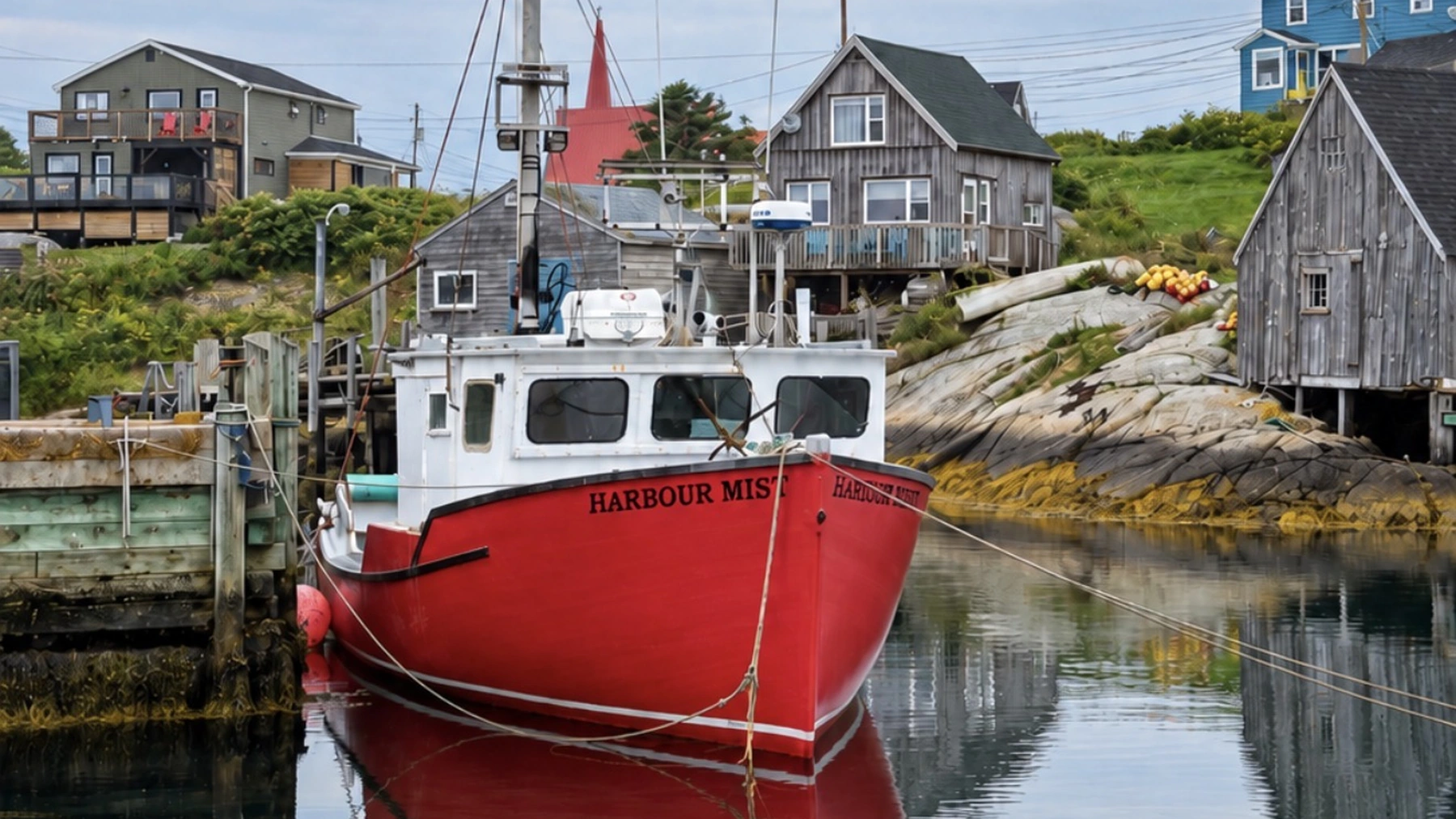
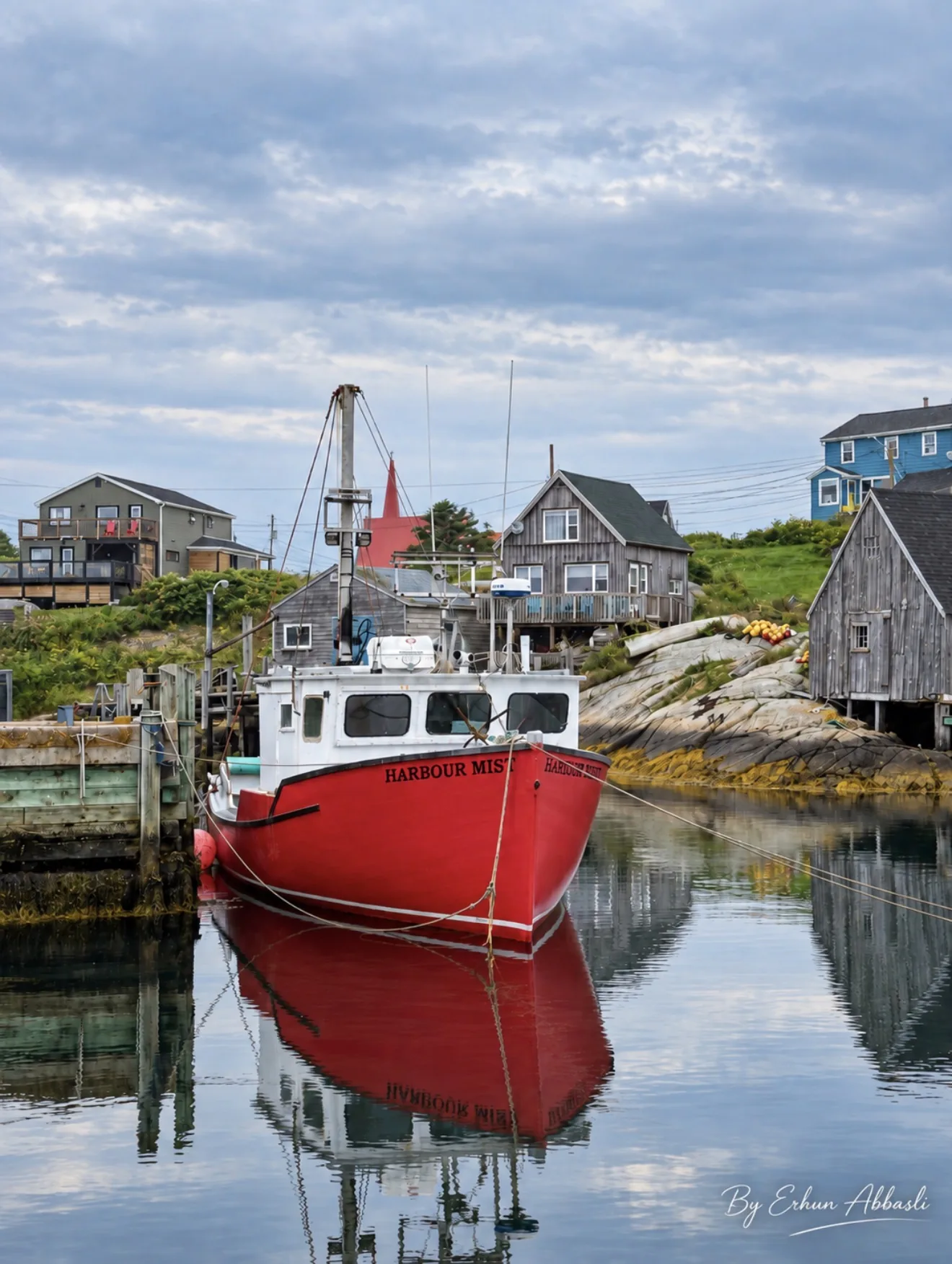
Peggy’s Cove was completely covered in Atlantic fog when I got there. The lighthouse kept appearing and disappearing while I was filming it, and the fishing village around it had the same heavy, quiet feeling. Even the boat in the harbour was called Harbour Mist, which fit right in.
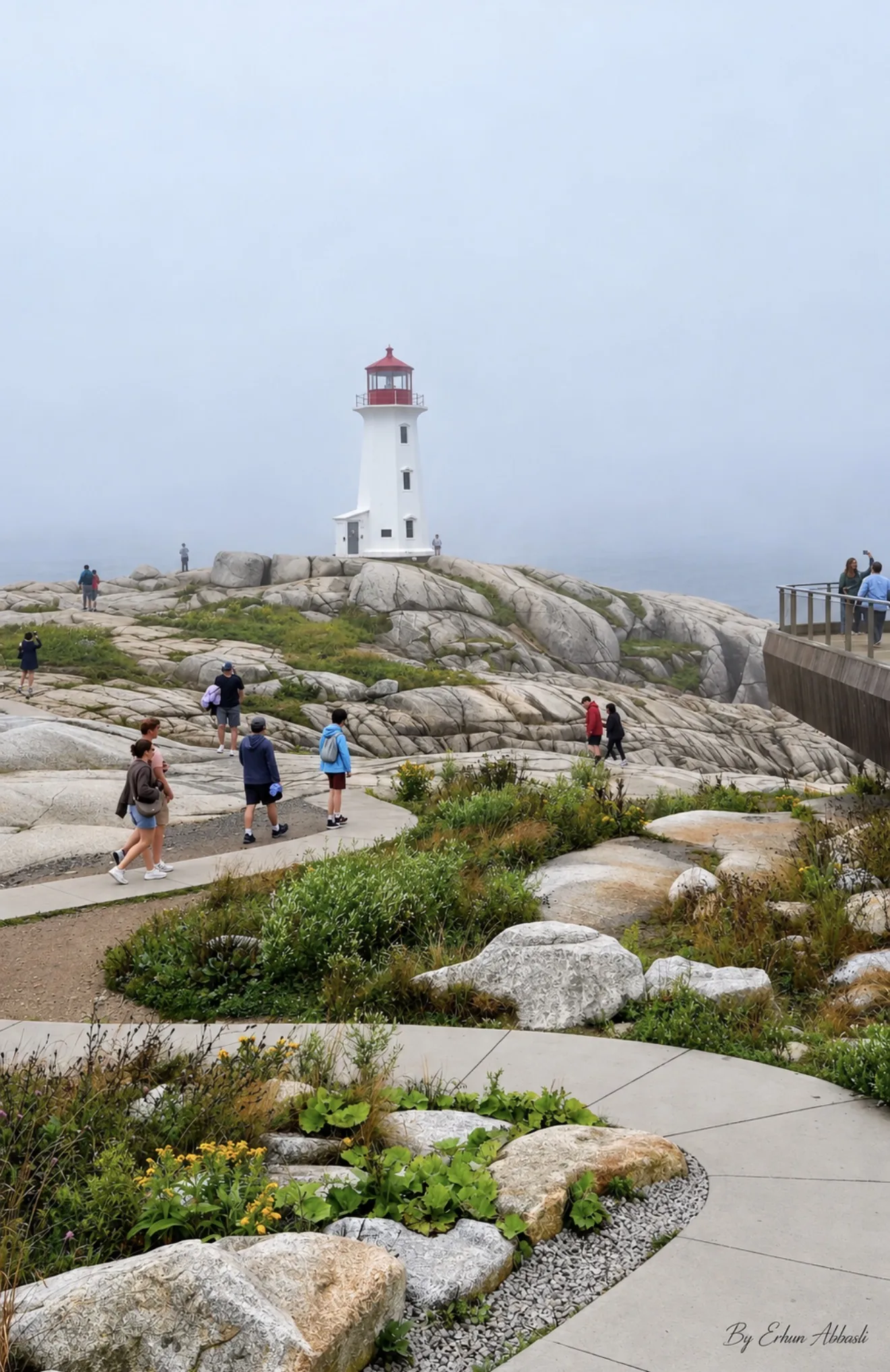
The weather was nothing like the bright version I had hoped to film, but the fog gave Peggy’s Cove a completely different atmosphere. Coastal weather changes quickly here, so I would not automatically cancel a visit because the forecast looks grey.
Peggy’s Cove safety
Stay on the dry, light-coloured rocks and follow the posted warnings. Unexpected waves can sweep people off the wet black rocks closer to the water, even when the ocean looks calm.
Mahone Bay, then Lunenburg
Mahone Bay makes an easy short stop on the way, and the well-known view is the waterfront with its three churches lined up together. Keep it brief if you only have a week.

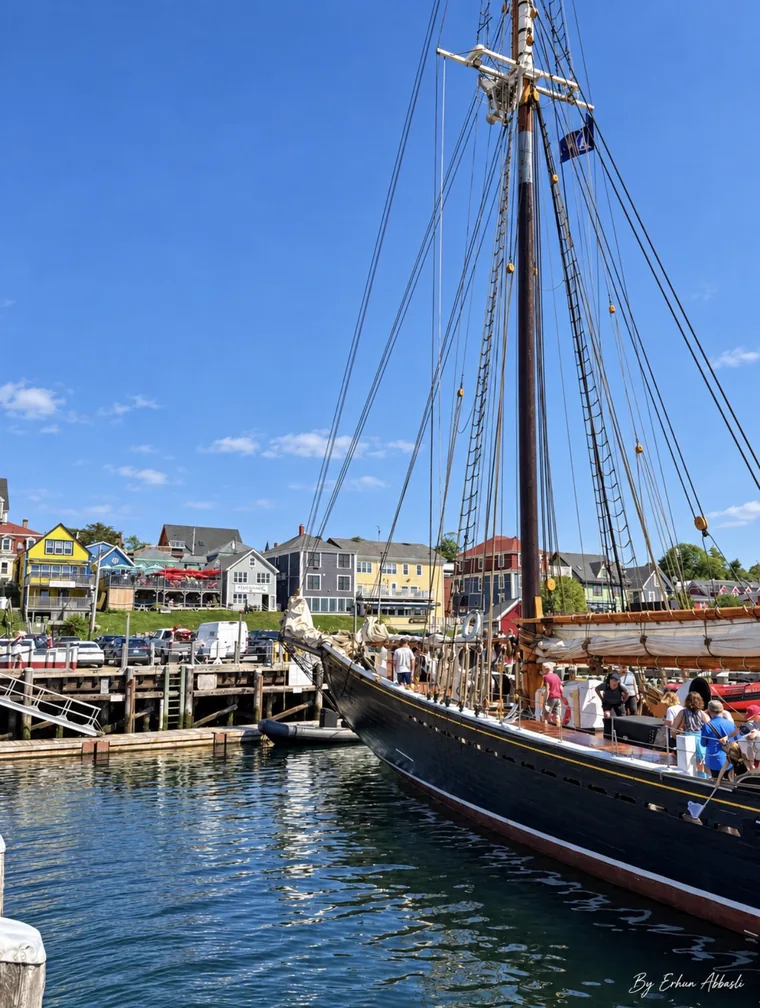
Lunenburg is where I would spend the most time. The entire Old Town is a UNESCO World Heritage Site, and the first thing you notice is the colour: red, yellow, blue and pastel buildings along the streets and the harbour. It is more than a pretty row of houses. Lunenburg is one of the best surviving examples of a planned British colonial settlement in North America, established in 1753 and still laid out on its original grid. The fishing and shipbuilding history is right there on the water.
I stayed overnight, which meant I could walk the town without rushing off before sunset.

Day 4
A walking tour, then the quiet coast
I started with a guided Lunenburg walking tour, and I would recommend it even if you have already wandered the town yourself. A guide points out things you would walk straight past. One is the Lunenburg bump, an architectural feature on some of the historic houses that you cannot unsee once someone shows you. You also get the stories behind the buildings, which is the part you cannot get on your own.
The tour runs about ninety minutes, goes ahead rain or shine, and there is no restroom along the route, so plan for that.
After Lunenburg the drive becomes more about beaches, fishing communities and the smaller stops in between. I ended up pulling over more often than I expected.
Summerville Beach
Summerville Beach gave me the best weather of the trip. After fog and rain earlier in the week, this stretch of the South Shore turned up sun, blue sky and a long sandy beach. I stayed right beside the coast, so I spent the rest of the evening there.
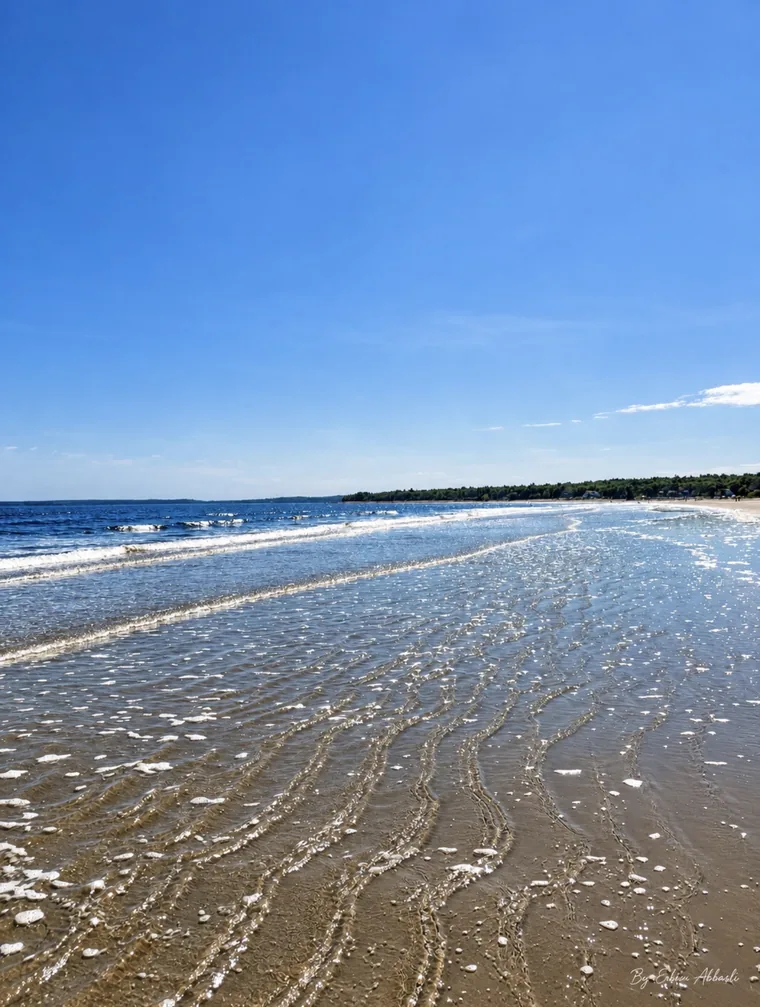
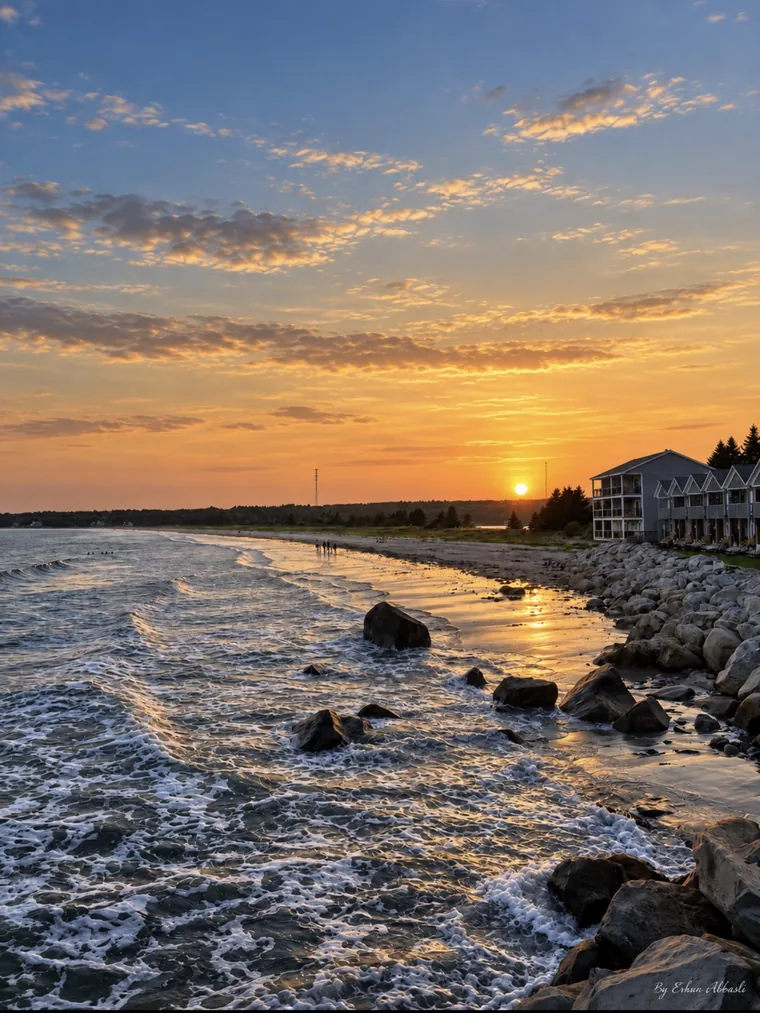
Do not build this part of the itinerary only around famous names.
Some of my favourite footage came from the stretches between the major stops, so leave room in the schedule to stop when something looks good.
Day 5
The day the weather cancelled the plan
This was meant to be one of the most unusual days of the trip. The plan was Tusket Island Tours out of Wedgeport, a boat experience built around the fishing culture of southwest Nova Scotia. The tour I had booked was supposed to include hauling a real lobster trap, a stop at a private fishing shanty on Big Tusket Island, seafood chowder made from a family recipe, and live music on the sail back.
Then there was fog. A lot of it. Conditions were too poor for the boat, and the tour was cancelled.
I am leaving this in because weather flexibility is not optional on a coastal Nova Scotia trip. You can plan everything perfectly and still wake up to a completely different Atlantic Ocean.
The day was not wasted, though. I sat down with Simon LeBlanc, who runs the tours with his brother, and he explained how lobster licences work, how crews operate, and what the fishery means to communities around southwest Nova Scotia. It wasn’t the boat trip I had planned, but I ended up learning things I probably wouldn’t have asked about otherwise.
I’d still try to book it again on a future trip. Just watch the wind and keep a backup.
From there I carried on to Yarmouth. The roads got quieter and the communities smaller the further southwest I went.
Day 6
Whale watching on the Bay of Fundy
After Yarmouth, it was finally time for the experience I had been looking forward to most. The drive up the Acadian coast to Digby Neck takes about two hours, and I would not cut it fine, because the check-in time is not flexible.
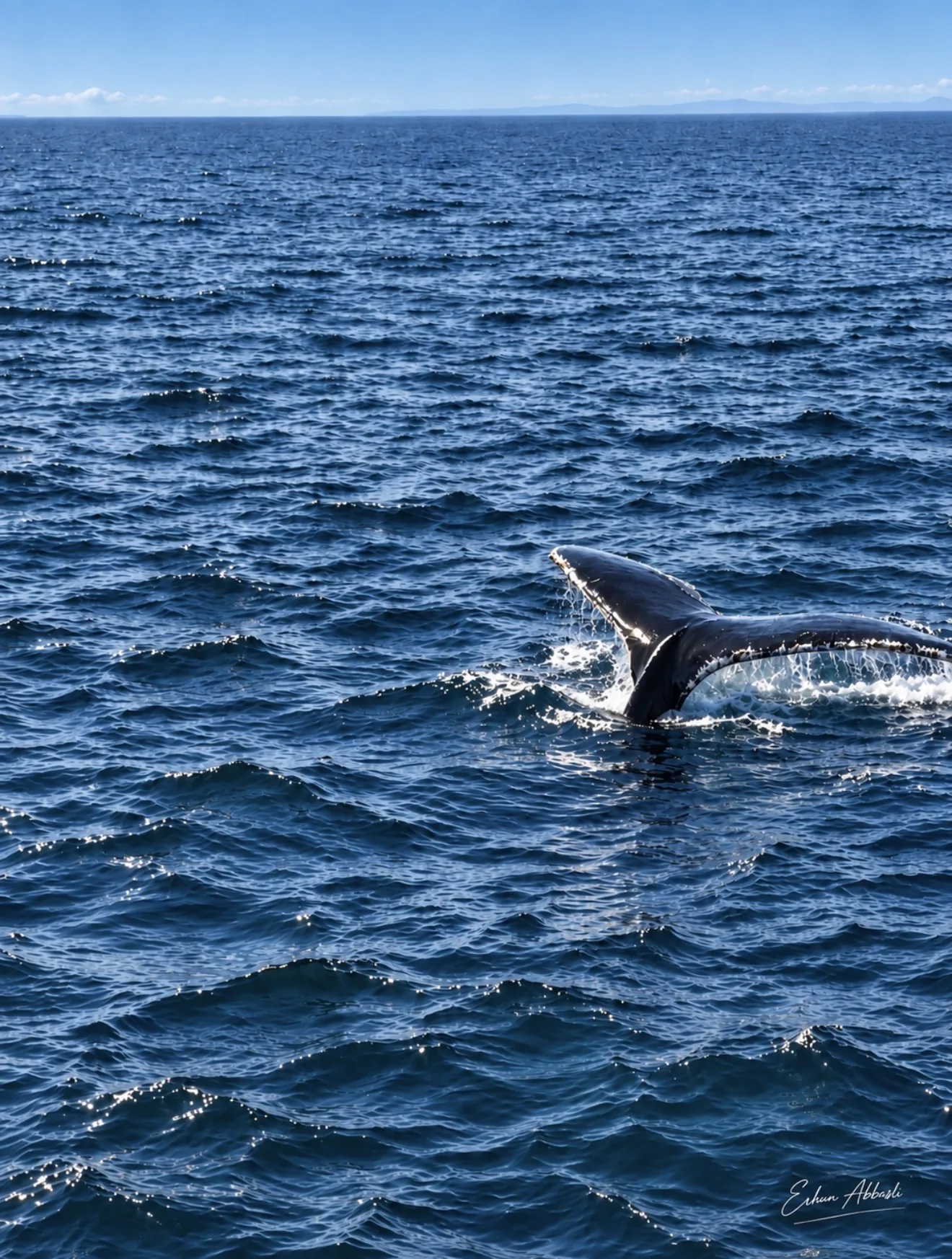
I went out with Petit Passage Whale Watch, which departs from East Ferry at the end of Digby Neck. Whale watching does not work like a theme park ride. There is no scheduled moment where a whale appears beside the boat. You leave the harbour, head for the known feeding grounds, and start looking. And waiting.
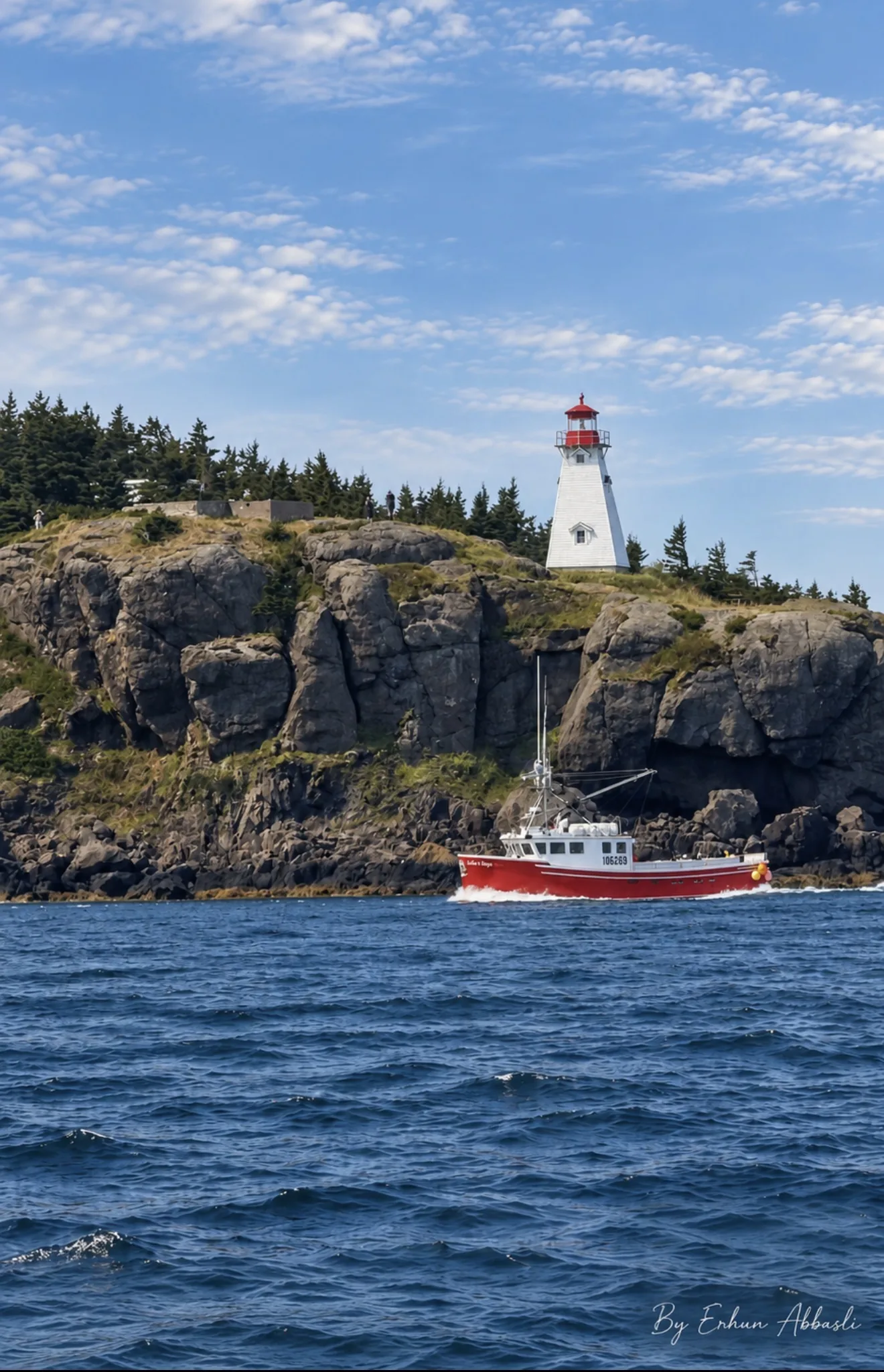
Then something breaks the surface.
Eventually I had to remind myself to stop filming and actually watch.
Seeing whales this close is the moment I will remember longest from the whole week. An animal that size in open water is a completely different thing from seeing one on a screen.
Whale watching tips
- Allow three to four hours in total, and arrive thirty to forty-five minutes before departure.
- Bring a warmer layer than you think you need. It is much colder on the water.
- If you get seasick, take something before you board, not once the boat is moving.
- Protect your camera or phone from spray.
- Do not book anything tight afterwards. Wildlife does not run to your schedule.
If you have spare time on the drive up, possible stops along this coast include Cape Saint Mary Lighthouse, Mavillette Beach, Smugglers Cove and Église Sainte-Marie. I would pick one rather than trying to string them together, because protecting your check-in matters more.
Dinner in Digby
It is about forty minutes from the whale watch to Digby, a working waterfront town with the fishing fleet tied up right outside the centre. Digby is famous for scallops. I am not a scallop person, so I ordered a whole steamed lobster at Fundy Restaurant instead, right beside the harbour. Simple, very Nova Scotia, and exactly what I wanted after several hours on the water.
Then I went upstairs. My room at Fundy Complex Dockside Suites had a balcony over the harbour and the fishing boats, and that was my favourite hotel view of the trip. Lobster downstairs, boats out the window, quiet balcony afterwards.
Day 7
Fort Anne, Grand-Pré and wine country
The last full day moves into a different side of the province. First stop is Fort Anne National Historic Site in Annapolis Royal, and this place has layers. Mi’kmaq, French, Acadian, Scottish and British stories all overlap on the same ground. The Scots built a fort here in the 1600s, French fortifications followed, and the British took Port-Royal in 1710. The settlement became Annapolis Royal and served as the capital of Nova Scotia until Halifax took over in 1749. It is also Canada’s first administered National Historic Site.
Walking the earthworks is far more interesting once you know how strategically important this spot used to be. If you like Canadian history, give it more than a photo stop.
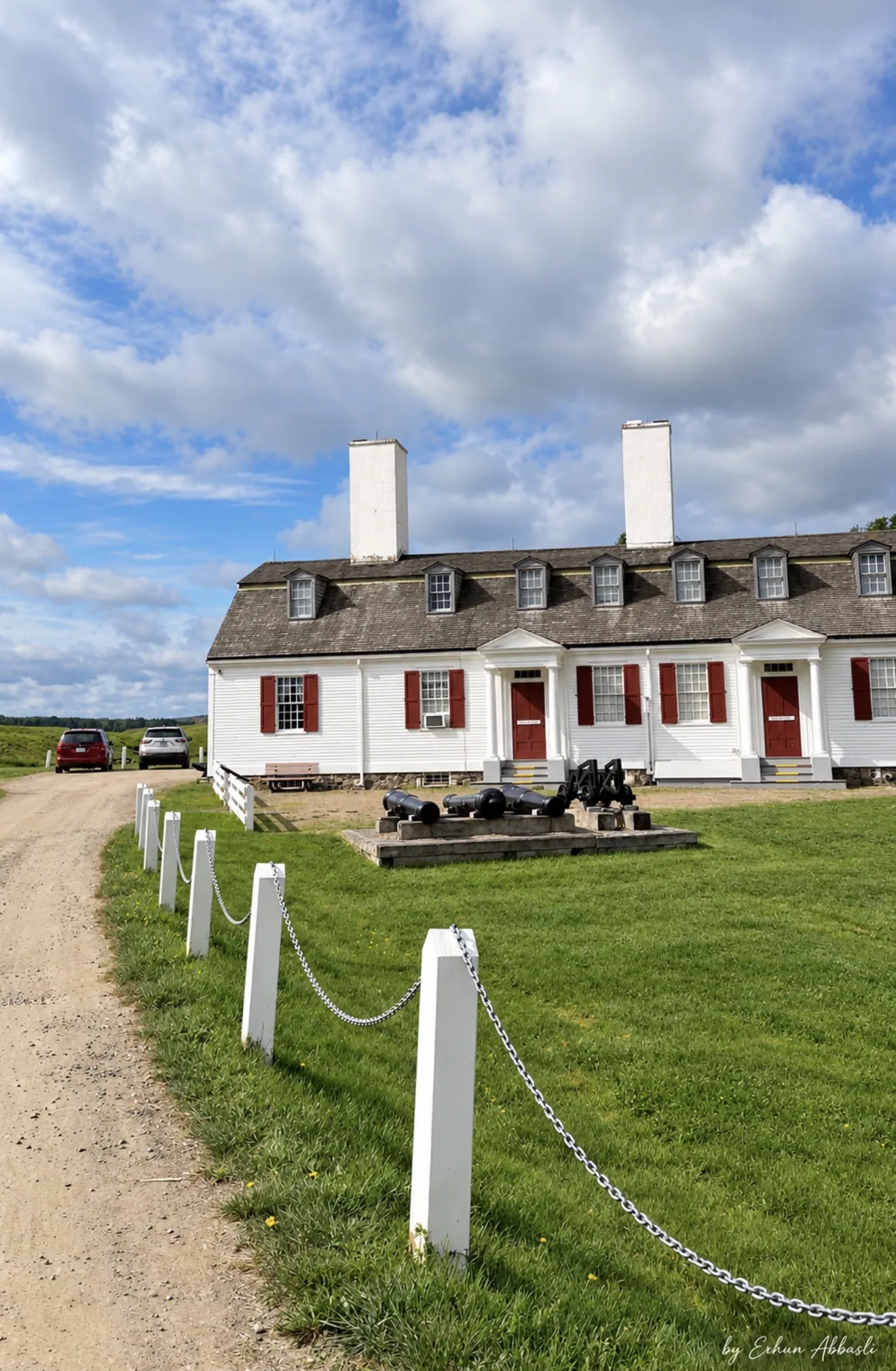
From Annapolis Royal I continued through the valley toward Grand-Pré National Historic Site, a quieter place but an important one. Grand-Pré tells the story of the Acadian people who built communities across this region, and of the deportation that began in 1755. The site takes in the Memorial Church, the gardens and the surrounding landscape, and the wider Landscape of Grand-Pré has been a UNESCO World Heritage Site since 2012. Doing both on the same day helped the history connect for me.
Wine country
Within the same stretch of the province, the historic sites give way to vineyards. I stopped at Domaine de Grand Pré, Atlantic Canada’s oldest farm winery. It was my first winery visit in Nova Scotia, so I kept it simple. I walked around the vineyard, explored the property and did a tasting.


If you are new to Nova Scotia wine, look for Tidal Bay, the province’s signature white wine and its first wine appellation. It is made entirely from Nova Scotia-grown grapes and reflects the fresh, crisp style of the province’s cool climate, which makes it a natural match for local seafood.
In Wolfville I also stopped at Church Brewing Co., a brewery and restaurant inside a converted church, and the building alone is worth seeing. And after that, a sweet crêpe in town was a very easy yes. One or two stops are enough here. Do not try to line up three wineries and a brewery in one afternoon.
The departure morning in Wolfville
Before heading to the airport the next morning, I had one final stop: the Wolfville Farmers’ Market. If your trip lines up with a Saturday, it is a good way to finish. Local produce, baked goods, prepared food and small vendors, and it doubles as breakfast.
From Wolfville, allow roughly an hour to Halifax Stanfield plus extra time to refuel and return the car. Do not leave the market too late if you have a midday flight.
Where I stayed
| Area | Stay |
|---|---|
| Halifax | The Lord Nelson Hotel & Suites, across from the Public Gardens |
| Lunenburg | Bluenose Lodge |
| Summerville Beach | The Quarterdeck Resort |
| Yarmouth | Rodd Grand Yarmouth |
| Digby | Fundy Complex Dockside Suites |
| Wolfville / Grand-Pré | The Evangeline |
Halifax gave me a central hotel I could walk from, Lunenburg felt historic, Summerville put me beside the beach, and the last nights moved into the Annapolis Valley. For the view alone, Digby was my favourite.
How much driving is involved?
It is a road trip, but the individual days are manageable. These are approximate times before you stop anywhere.
| Leg | Time |
|---|---|
| Halifax to Peggy’s Cove | About 1 hour |
| Halifax to Lunenburg | About 2.5 hours via the Lighthouse Route |
| Lunenburg to Summerville Beach | About 1.5 hours |
| Summerville to Wedgeport | About 2 hours |
| Yarmouth to Digby Neck | About 2 hours |
| Digby Neck to Digby | About 40 minutes |
| Digby to Grand-Pré | About 2 hours direct |
| Wolfville to Halifax airport | About 1 hour |
Practical questions
Do you need a rental car in Nova Scotia?
For this route, yes. Downtown Halifax is easy without a car, but once you leave the city, having one gives you the flexibility this itinerary really needs. I picked mine up at Halifax airport and returned it there.
Is seven days enough for Nova Scotia?
Enough for this half of the province, not the whole thing. Adding Cape Breton and the Cabot Trail would make the week rushed. They deserve their own trip.
When is the best time to go?
Summer gives you the seasonal tours, beaches and markets. Just expect Atlantic weather to change fast even in August, and keep one or two things flexible.
Is Peggy’s Cove worth visiting in fog?
Yes. The fog completely changed how it looked and I still thought it was worth going. Only skip it if conditions are genuinely unsafe.
Is whale watching in Nova Scotia worth it?
For me it was the highlight of the week. Sightings are never guaranteed, and that uncertainty is part of it.
How far is Nova Scotia from Toronto?
Just over two hours by air to Halifax. Remember the province is an hour ahead on Atlantic time.
What would you do differently?
Leave more flexibility around coastal activities. Fog and rain affected several stops, and Tusket Island Tours was cancelled entirely.
Final thoughts
In one week this route goes from city streets and fishing villages to beaches, whales, lobster, history and wine country. What made it work was how little each day resembled the one before it.
If you are in Ontario and want an East Coast trip that feels genuinely different without a long flight, Nova Scotia is an easy one to put on the list. My main advice is not to overplan it. Pick the places you really want to see, give yourself enough time to drive the coast properly, and leave room for the weather to change the plan. On this trip, it definitely did.
If you have already been to Nova Scotia, tell me which stop you would add to this route.
Discover more from Shared Passports
Subscribe to get the latest posts sent to your email.
